Evidence-Based Menopause Skin Care
Hormonal shifts during perimenopause and menopause profoundly alter skin physiology, from the barrier and microbiome to collagen and volume. Understanding the science leads to better, healthier skin at every stage.

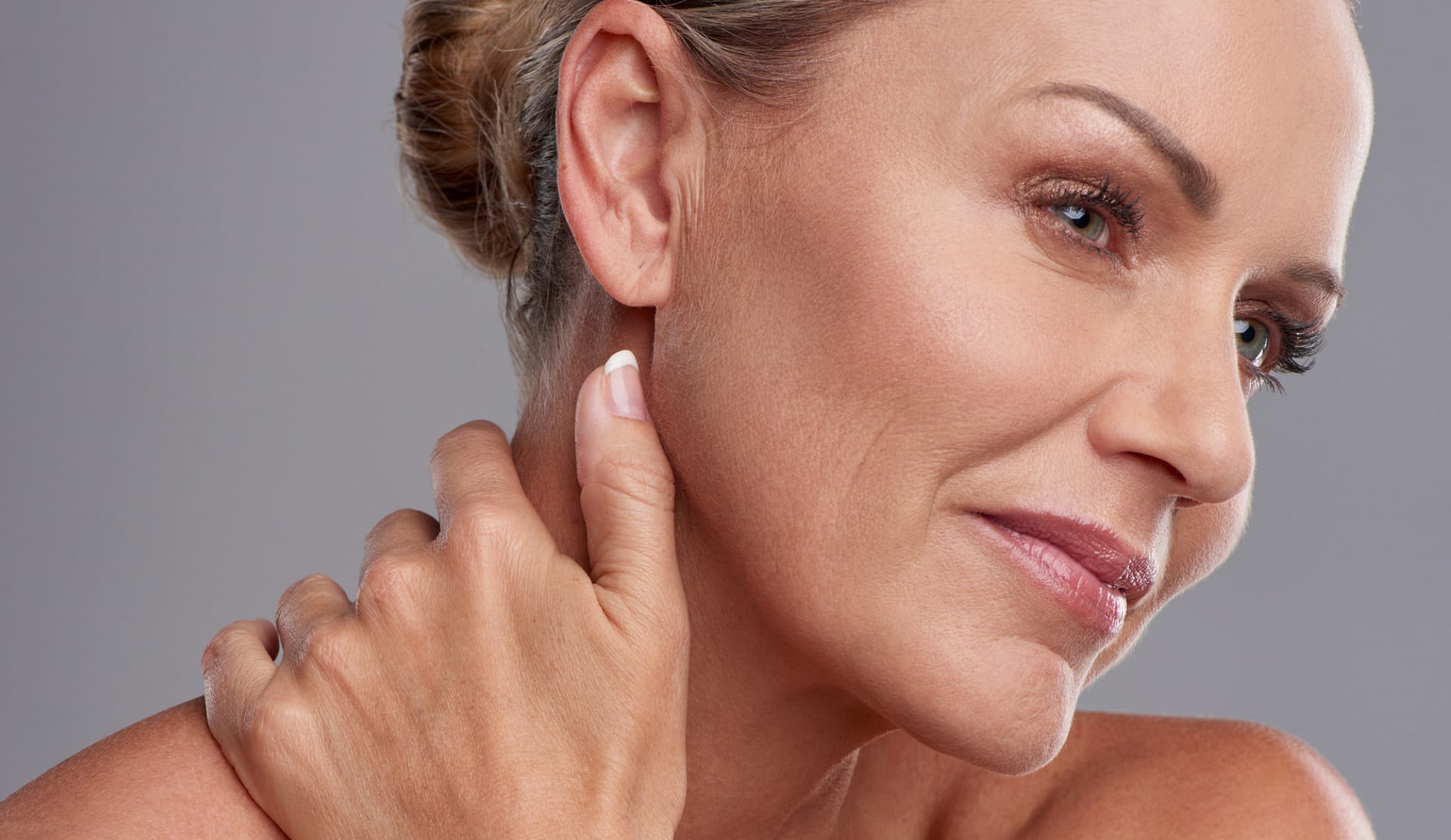
Hormonal shifts during perimenopause and menopause profoundly alter skin physiology, from the barrier and microbiome to collagen and volume. Understanding the science leads to better, healthier skin at every stage.
Menopause is not a single event but a gradual transition, and the skin responds to every stage of it. Oestrogen decline sets off a cascade that touches barrier integrity, microbial balance, inflammatory tone, collagen density, and facial volume. Each domain is interconnected.
The most effective approach recognises this complexity. Managing one factor, say redness, while ignoring barrier dysfunction or dysbiosis will yield incomplete results. True skin health through this transition requires a systemic, layered strategy.
The good news: evidence-based regenerative treatments have advanced considerably. We now have tools, from targeted lasers to biostimulators to microbiome-aware skincare, that address each of these changes with precision and nuance.


The skin changes of menopause stem from three deeply interconnected biological processes.
Oestrogen plays a critical role in maintaining the stratum corneum’s lipid matrix. As levels decline, transepidermal water loss increases, ceramide production falls, and the skin’s capacity to retain moisture and resist irritants diminishes. The result: increased sensitivity, dryness, tightness, and reactivity, even in skin that was previously resilient.
Hormonal changes alter skin pH, sebum composition, and local immune signalling, all of which shape the skin microbiome. The resulting dysbiosis (imbalance of microbial communities) can amplify inflammation, worsen conditions like seborrhoeic dermatitis and rosacea, and impair the skin’s first-line immune defence. A compromised microbiome creates a self-perpetuating cycle of irritation.
Chronic, low-grade inflammation, “inflammageing”, is both a hallmark of biological ageing and an amplifier of menopausal skin changes. Reduced oestrogen removes its anti-inflammatory protection, while the declining microbiome and barrier dysfunction contribute further inflammatory signals. This persistent background inflammation accelerates skin ageing and sensitises existing conditions.
These five presentations are commonly seen during the perimenopausal and postmenopausal transition, each driven by a different combination of the three biological shifts above.
Seborrhoeic dermatitis, psoriasis, and acne can all flare significantly during perimenopause. Declining oestrogen tips the immune balance, while dysbiosis and barrier impairment act as compounding triggers. Hormonal acne, often presenting on the lower face and jawline, is particularly common as the androgen-to-oestrogen ratio shifts. Treating the underlying inflammatory state is always the first priority.
Vasomotor instability during menopause produces hot flushes that are more than just a sensation, they are vascular events that, repeated over time, cause cumulative dilation of superficial facial vessels. Combined with decades of photoageing and an underlying rosacea tendency, persistent facial redness and visible vessels are extremely common. Both medical and procedural options exist to significantly reduce this burden.
Pigmentation disorders are driven by a convergence of forces: cumulative ultraviolet exposure, residual hormonal influence, post-inflammatory hyperpigmentation from inflammatory dermatoses, and the photoageing clock. Melasma in the menopausal years is often mixed in aetiology and responds best to a multi-pronged approach addressing pigment, inflammation, and sun protection simultaneously.
Oestrogen is a key regulator of collagen synthesis and fibroblast activity. Studies show collagen loss accelerates dramatically in the perimenopausal window, approximately 30% of skin collagen is lost in the first five years after menopause. The resulting laxity affects facial contour and skin texture in ways that compound volume loss. Regenerative and energy-based approaches can help reactivate the skin’s natural collagen-building capacity.
The visible changes of menopausal ageing are not just skin-deep. Subcutaneous fat redistributes and diminishes; muscle mass, including facial muscles, decreases; bone resorption changes the underlying scaffold of the face. These structural changes are the root cause of the “sagging” often attributed to skin alone. Effective treatment requires addressing all three layers, skin, soft tissue, and structure, for naturally restored facial harmony.
Every aesthetic goal rests on a foundation of skin health. We address medical conditions first, not as a preamble to aesthetics, but as the aesthetic treatment itself.
We take a structured, evidence-based approach that moves through skin health, cosmetic management, structural restoration, and regenerative care, in that order, with each phase informing the next.
No two patients are the same. Hormonal history, skin type, lifestyle, and individual goals all shape the treatment path. Our role is to synthesise all of this into a plan that is both medically sound and aesthetically meaningful.
Diagnose and stabilise active skin conditions with appropriate medical care. Restoring barrier function and microbiome balance are foundational, everything else builds on this.
Address vascular reactivity and pigmentary concerns in a way that treats the underlying causes, not just the visible appearance, with photoprotection as a non-negotiable constant.
Stimulate the skin’s regenerative capacity to rebuild collagen and improve laxity, reactivating the fibroblast activity that oestrogen withdrawal has slowed.
Restore the structural support beneath the skin, soft tissue, muscle, and skeletal, giving skin the foundation it needs to look naturally lifted and harmonious.
Reduce inflammageing through long-term strategies combining medical, procedural, and lifestyle approaches, sustaining skin health as an ongoing practice, not a one-time intervention.

Dermatologists who consult at Northside Dermatology develop individualised treatment plans to address the complex skin changes associated with menopause, including inflammation, pigmentation, vascular changes, and collagen loss. Treatment strategies may include evidence-based medical care, prescription skincare, and advanced technologies, carefully selected to align with each patient’s skin profile and goals.
These tailored plans are designed to support long-term skin health and visible improvement.
Hormonal changes, particularly a decline in oestrogen, affect multiple aspects of skin function. This can impact hydration, collagen production, skin thickness, and the skin barrier, leading to dryness, sensitivity, and visible ageing.
Common concerns include dryness, increased sensitivity, redness, pigmentation, breakouts, and loss of firmness or elasticity. Some existing conditions, such as rosacea or acne, may also worsen during this time.
Yes, hormonal shifts can trigger breakouts, particularly along the lower face and jawline. This is often due to changes in the balance between oestrogen and androgens, which can influence oil production and inflammation.
As oestrogen levels decline, the skin barrier becomes less effective at retaining moisture and protecting against irritants. This can make skin feel drier, more sensitive, and prone to redness or irritation.
Yes, collagen production decreases significantly during menopause. Studies suggest that up to 30% of collagen can be lost in the first five years after menopause, contributing to skin thinning, fine lines, and reduced firmness.
Treatment options may include medical therapies, prescription skincare, and advanced technologies such as laser treatments and collagen-stimulating procedures. The most appropriate approach depends on your individual skin concerns and clinical assessment.
Yes, pigmentation can be influenced by hormonal changes, sun exposure, and inflammation. Melasma and uneven skin tone may persist or become more noticeable, particularly without consistent sun protection.
A combination of barrier-repair skincare, hydration, and targeted treatments can help improve skin quality. In some cases, medical or procedural treatments may be recommended to support collagen production and overall skin health.
If you notice persistent changes such as ongoing redness, breakouts, pigmentation, or increased sensitivity, it’s worth seeking professional advice. Early assessment can help guide appropriate treatment and prevent concerns from progressing.
While menopause is a natural process, many skin changes can be effectively managed and improved. With the right combination of medical care, skincare, and treatments, it is possible to restore healthier, more resilient skin over time.

Hormonal changes can transform your skin in unexpected ways. At Northside Dermatology, our dermatologists create personalised treatment plans that target the root causes, whether that’s inflammation, pigmentation, or loss of firmness. Using evidence-based care and advanced treatments, we support your skin through every stage.
